EU internal border regions cover 40% of EU territory and are home to almost 2 million cross-border commuters according to the latest report on intra-EU labour mobility. Nevertheless, cross-border workers may face a number of obstacles on a daily basis, such as different national practices, social security systems, taxation rules and legal systems. Employers in cross-border regions similarly face numerous barriers when recruiting staff across borders. EURES cross-border partnerships help workers and employers overcome these obstacles under the umbrella of the European Social Fund Plus (ESF+). See how EURES cross-border partnerships work and how they can support you in this short video: |
|
EURES Members and Partners work together across borders to increase the ability of workers to work abroad and employers to enable this. Organisations that are not part of the EURES network may also participate if they can help in this regard. Partners usually include public employment services, employers’ groups, and organisations such as universities, business associations, trade unions and chambers of commerce or regional administrations.
EURES cross-border partnerships share information and advice for jobseekers and employers on working and recruiting/employing across borders, offer placement opportunities and provide pre- and post-recruitment services. Pools of experts are available to support workers at every stage of their career and answer any questions they may have about the practicalities of working over the border.
EURES cross-border partnerships also monitor the flows of workers across their respective borders and the development of the job market, thus identifying obstacles that may hamper the free movement of workers within the regional cross-border job market.
In 2024, 2025 and 2026, 6 EURES cross-border partnerships, involving 8 EU countries receive ESF+ funding:
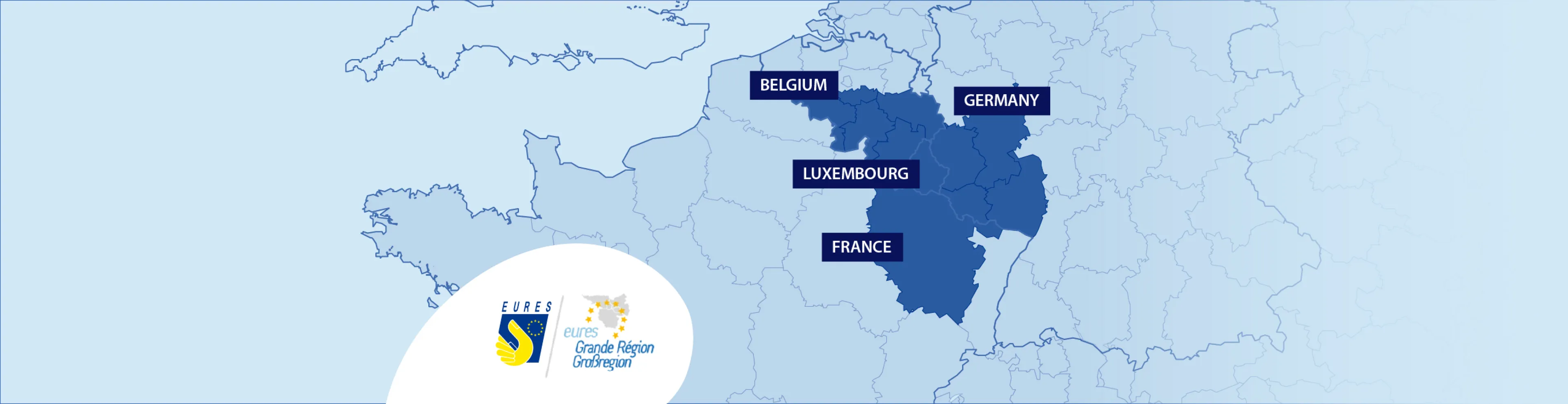
↑ EURES Greater Region is the cross-border partnership between France, Luxembourg, Germany and Belgium. It facilitates fair labour mobility, supports recruitment and skills development, and contributes to the green and digital transitions, fostering an integrated and resilient cross-border labour market.
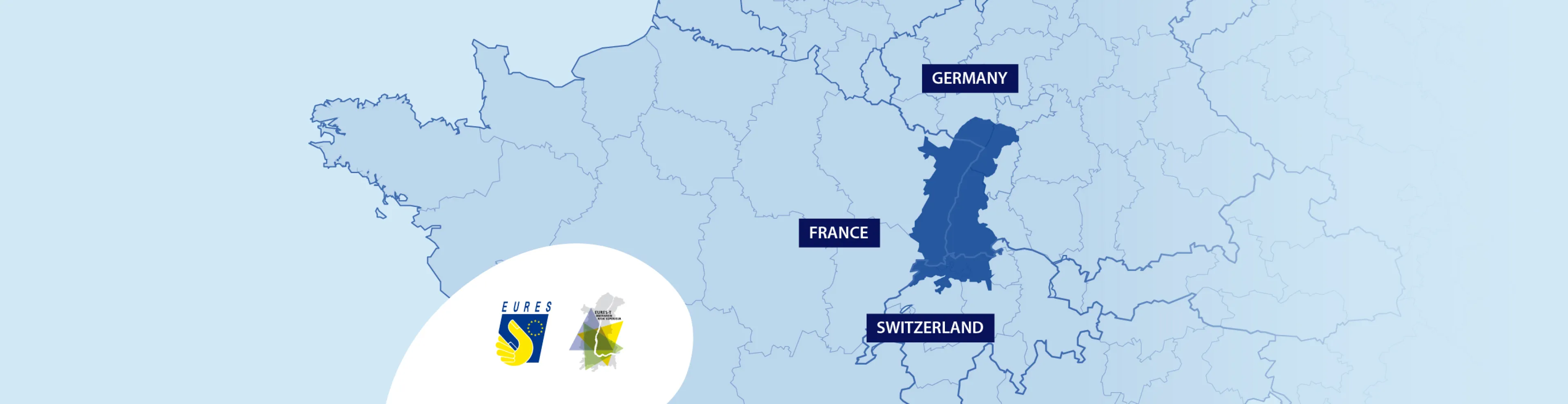
↑ EURES-T Oberrhein / Rhin Supérieur brings together labour market stakeholders from Germany, France and Switzerland.
The partnership's services currently address around 100,000 cross-border commuters in the Upper Rhine region, including Alsace, Southern Palatinate, Baden and Northwestern Switzerland.

↑ EURADRIA connects Italy and Slovenia in a single cross-border space! Our Infodesks provide free services within labour market and social protection systems to frontiers, jobseekers and employers. In need of assistance? Visit euradria.eu, and let’s enjoy the benefits of our borderless area!

↑ Led by the SAE and IEFP public employment services, the EURES-T Andalusia-Algarve project aims to streamline the labour market between both regions. By providing specialised recruitment and advisory services, the project partners actively promote the development of a collaborative ecosystem for mobility, strengthening the territorial alliance.

↑ Cross-border partnership promoting fair labour mobility, recruitment and employment opportunities between Extremadura (Spain) and Alentejo (Portugal).

↑ A dynamic cross-border partnership linking Galicia and Northern Portugal, uniting employment services, social partners, universities and local authorities to boost cooperation, connect talent and employers, and make cross-border work fair, easy and transparent..
For further advice on job opportunities in your region, search for EURES Advisers by cross-border partnership.
In addition, partnerships are active without EU financial support or with different EU funding models: